
Inquiries, partnerships, and case study downloads:example@robotlyne.com
Automatic Test Line AGV Material Handling System
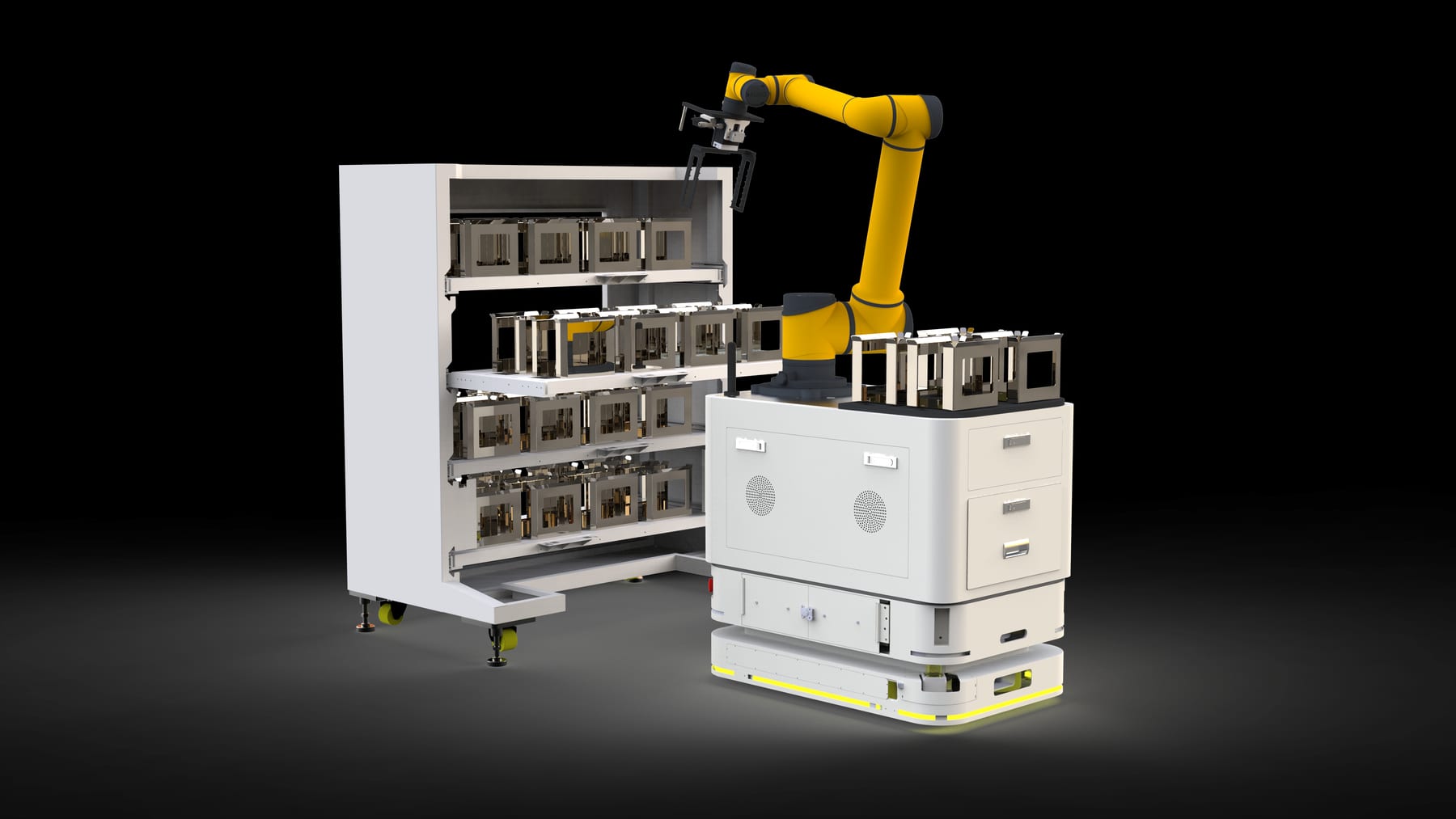
A test-line logistics concept for ten test machines, using stacked tray transfer, line-side roller docking and a composite robot to keep automated testing supplied.
Project Snapshot
- Client Type
- Electronics Manufacturer
- Timeline
- Project plan dated 2026-03
- Deliverables
- Ten-machine automatic test loading and unloading flow
- Stacked tray buffering and line-side roller docking
- Composite robot test-machine loading cycle
- SRD API integration basis for upper-level dispatch
Background
Project scope
We designed an automatic material-handling system for a new test line with ten test machines. The handled material is a tray or magazine-style carrier, with a stated raw-material size no larger than 280 x 420 mm and a raw-material weight no greater than 2 kg.
The upper-level system connects through an SRD standard API. Line-side loading and unloading use roller docking, and the AGV body is planned with four buffer positions.
Operating target
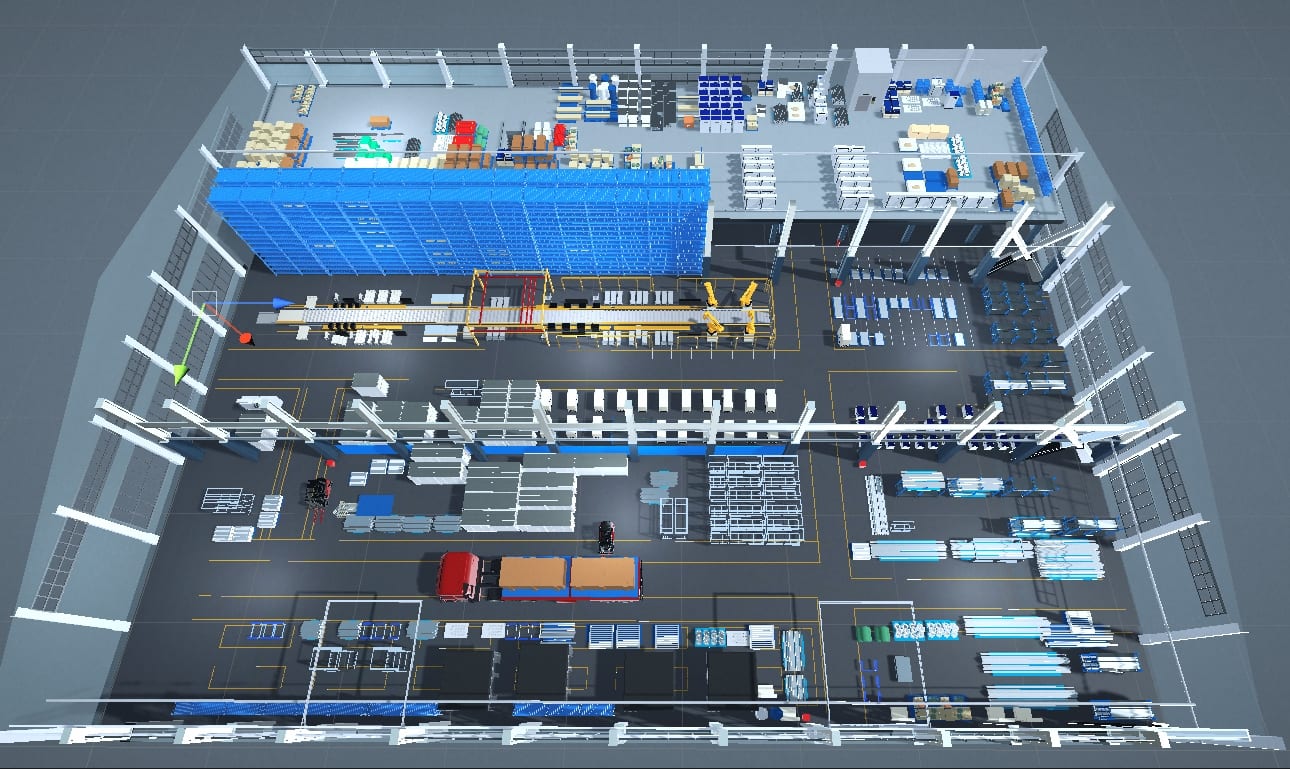
The logistics flow starts from prepared raw material, moves material to the tester infeed, returns OK tested material to downstream buffering and sends NG material to a manual handling area. The goal is to automate the complete test-line material flow and reduce repeated manual transport around the test machines.
Challenge
Test cadence pressure
Each test machine completes one tray in 25 minutes. With ten machines in operation, the line requires one loading/unloading response roughly every 2.5 minutes.
The design basis uses a tray height of 5 cm and a maximum stack height of 40 cm, allowing eight tray layers per stack. Under the 2.5-minute response basis, one stack can cover about 20 minutes of operation. We therefore planned the composite robot cycle around stack-level transfer rather than single-tray-only handling.
OK and NG routing
The test process must distinguish OK and NG results. OK trays need to move to the qualified-material buffer route, while NG trays may require recheck, fixture inspection or transfer to a manual receiving point.
Approach
Material flow concept
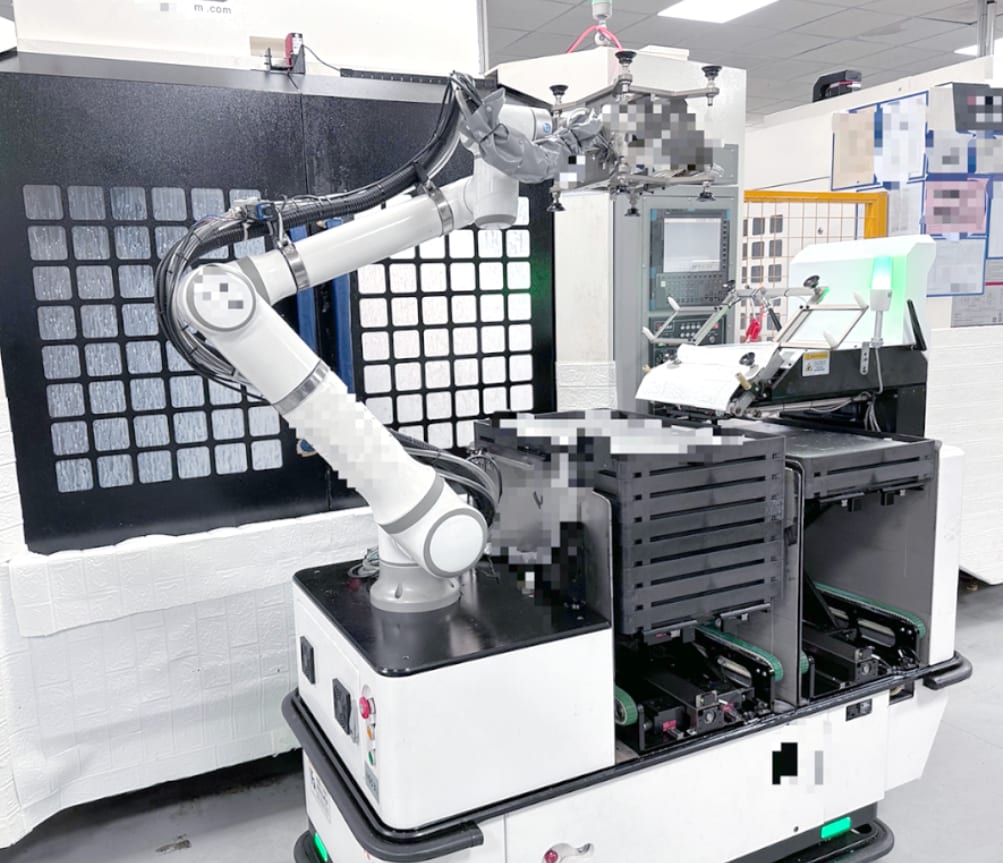
The operator places stacked trays onto the incoming buffer roller line. A single-station roller AGV replenishes the transfer table. The composite robot picks the stacked trays, loads the test machine after MES signal coordination, unloads completed material and routes finished trays according to test result.
When a stack is consumed, the roller AGV replenishes the next stack automatically. If incoming and transfer areas are close enough, the plan allows the roller-line layout to be simplified to reduce cost.
Equipment and system configuration
The system combines:
| Module | Role |
|---|---|
| Composite robot | Stack transfer, tester loading and finished-material unloading |
| Roller AGV | Buffer-table replenishment and OK material transfer |
| Loading transfer table | Incoming stack buffer for the composite robot |
| Unloading transfer table | OK/NG split and downstream transfer |
| Upper-level system | SRD API connection and test-machine task coordination |
Outcome
Expected value
The design converts test-line loading and unloading into a controlled AGV and composite-robot cycle. It supports the stated 25-minute-per-tray test cadence across ten machines, provides OK/NG routing logic and reduces manual movement between temporary storage, test machines and downstream buffer points.
Implementation basis
The solution is based on confirmed project constraints: ten test machines, 25 minutes per tray, 2.5-minute line-level response demand, eight tray layers per stack, four AGV buffer positions and SRD API connection to the upper-level system.
Project Feedback
Share a short review of this case study or tell us what kind of automation project you want to compare it with.
No published reviews yet.