
Inquiries, partnerships, and case study downloads:example@robotlyne.com
Feeding and Handling Composite AGV Cell
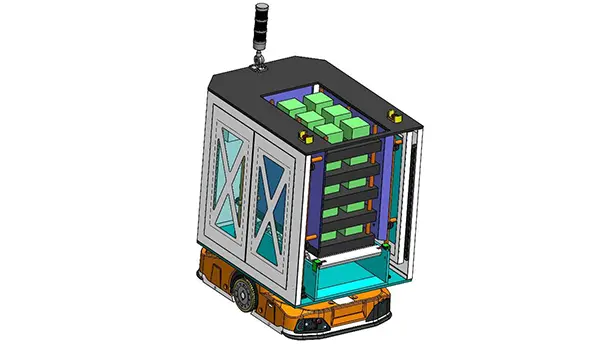
A composite mechanical AGV concept for tray feeding, roller docking and machine-side material handling with a compact robot-transfer layout.
Project Snapshot
- Client Type
- Industrial Manufacturing Plant
- Timeline
- Project plan dated 2026-03
- Deliverables
- Composite AGV feeding and handling concept
- Roller docking table and transfer layout
- Vehicle chassis and conveyor module plan
- Tray capacity and machine-side handling basis
Background
Project scope
We designed a feeding and handling cell based on a composite mechanical AGV. The system is intended to receive tray-based material, move it through a roller docking interface and support machine-side feeding or transfer operations.
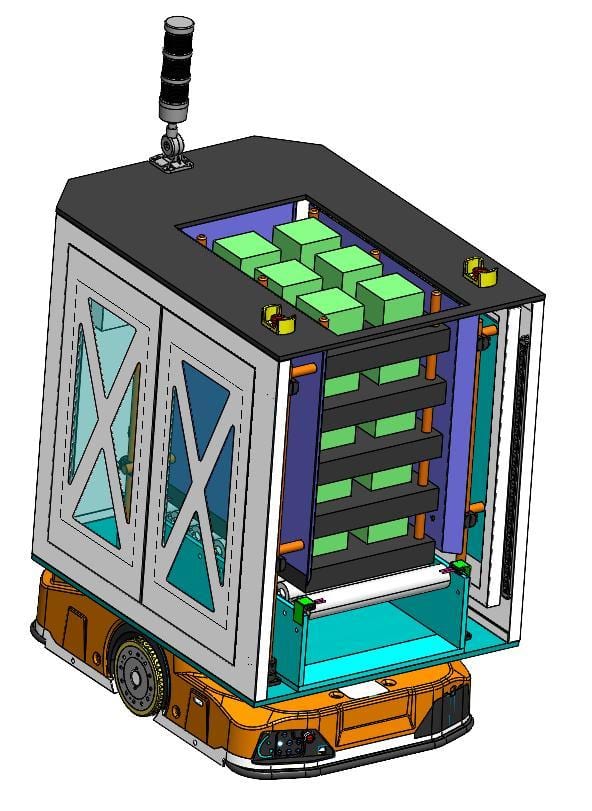
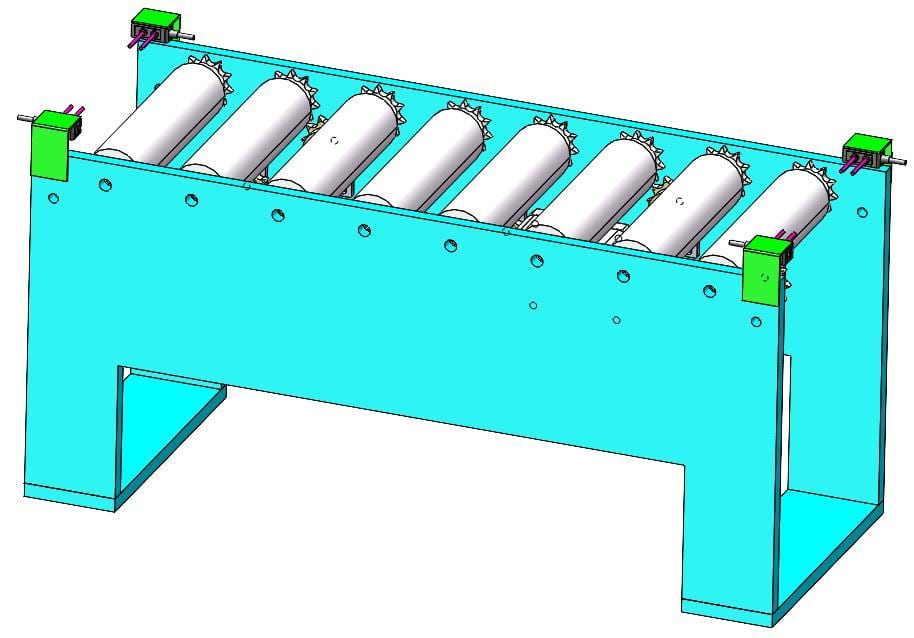
The main equipment group includes a composite AGV, receiving vehicle module, docking table and roller conveyor modules. The plan uses tray buffering to support repeated material transfer without constant manual replenishment.
Challenge
Stable tray exchange
The production process requires raw material to be delivered to the machine side and processed material to be returned through a predictable docking route. Roller transfer must be stable, and the vehicle must align accurately enough for repeated tray exchange.
Load and access
The design basis uses a 300 kg roller conveyor load basis and 100 to 300 mm/s conveyor speed. The docking table is stated as 1,100 x 7,000 x 1,600 mm and can buffer 10 trays. The composite robot vehicle uses a four-tray capacity basis.
Approach
Docking concept
The docking table receives processed material and transfers it to the next area, while also returning raw material from other areas to the docking point. Roller speed is adjustable from 100 to 300 mm/s, allowing the transfer motion to be tuned during commissioning.
Composite AGV configuration
The composite robot vehicle has a stated size of 1,450 x 800 x 1,250 mm and a four-tray buffer capacity. Its role is to carry material to the equipment side, support transfer through the roller interface and keep the handling cycle compact.
Width and length variants
The engineering brief includes layout variants for different vehicle orientations. One width-direction module uses a 1,100 x 1,100 x 1,200 mm basis, and one length-direction vehicle layout uses a 1,400 x 900 x 1,200 mm basis.
Outcome
Expected value
The proposed cell reduces manual tray feeding around the equipment side and gives the production area a repeatable transfer point. The design is suitable for tray-based workflows that need short-cycle machine-side movement and AGV-supported replenishment.
Confirmed design basis
The published case keeps to confirmed project information: 300 kg roller load basis, 100 to 300 mm/s roller speed, 10-tray docking-table buffer, four-tray composite-vehicle buffer, and the stated equipment envelope values available in the project brief.
Project Feedback
Share a short review of this case study or tell us what kind of automation project you want to compare it with.
No published reviews yet.